Description
Gravel Binder Application Guide
1. Choose the Right Stone
-
Maximum size: Up to 20 mm gravel is ideal.
-
Best shape: Angular stones (with edges and corners) bond much better.
-
Avoid: Very rounded pebbles – they have fewer contact points, so the glue can’t grip as well and the finish will be weaker.
2. Best Application Method (Recommended)
Do this instead of just pouring from a watering can:
-
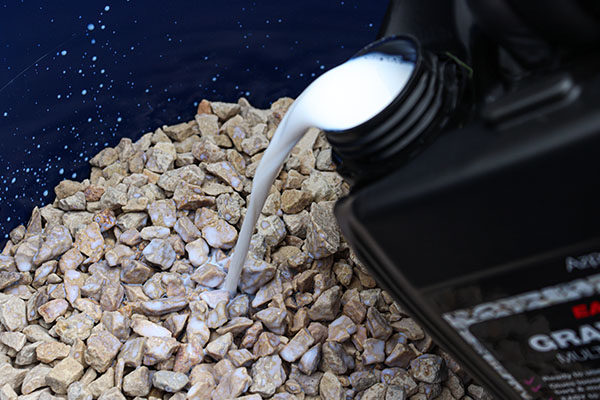
Pre-mix in a bucket
-
Put a portion of clean, dry stones into a bucket.
-
Add some of the liquid binder to the bucket.
-
Mix thoroughly so that all stones are lightly coated with a thin film of resin.
-
-
Lay the coated stones
-
Spread the coated stones out evenly over the prepared area.
-
Lightly level and shape as required.
-
-
Optional: Additional coats
-
Once the first layer has fully cured, you can apply further light applications of binder over the surface.
-
These later coats stick better, because the first layer gives the binder something firm to grip.
-
Why not just use a watering can?
If you only pour the product over loose gravel, most of the liquid will run off the stones and collect at the base, so only some stones get coated and the bond will be weaker.
3. Curing Time
-
Curing depends on temperature and conditions.
-
In cooler weather, expect it to take several days to fully harden.
-
Keep the area dry and undisturbed while curing – no walking, driving, or hosing down.
Making the product “thicker” doesn’t help – it would just pool in low spots and take a very long time to cure, which is a problem with all gravel glues.
4. Temperature & Weather – Very Important
-
Do not use if the temperature is below 10°C.
-
In cold conditions the binder cures very slowly, so:
-
Any rain during that time can ruin the job.
-
The surface may stay soft and tacky for a long time.
-
Our recommendation:
Only apply when:
-
Air and ground temperatures are above 10°C, and
-
The forecast is dry for the next few days.
5. Working in Cold Weather (Alternative Option)
If someone must bond stones or pebbles in cold conditions:
-
Consider using an epoxy resin system instead.
-
Be aware:
-
Costs are higher than standard gravel glue.
-
Application can require specialist equipment and experience.
-
6. Quick Troubleshooting Notes for Customers
If a customer reports problems like loose stones or weak bonding, the most likely causes are:
-
Stones were too large or too rounded.
-
Product was only poured on from above, so most ran off and collected at the bottom.
-
Temperatures were too low and/or there was rain during curing.
-
Area was walked on or disturbed before the binder had fully cured.